

- University
- Academic
- Schools/Vocational Schools
- Vocational School of Justice
- Vocational School
- Vocational School
- Department of Banking and Insurance (Turkish)
- Department of Computer Programming (Turkish)
- Department of Foreign Trade (Turkish)
- Department of Graphic Design (Turkish)
- Department of Interior Design (Turkish)
- Department of Construction Technology (Turkish)
- Department of Occupational Health and Safety (Turkish)
- Department of Media and Communication (Turkish)
- Department of Architectural Restoration (Turkish)
- Department of Radio and Tv Programming (Turkish)
- Department of Civil Aviation Cabin Services (Turkish)
- Department of Civil Aviation Transportation Management (Turkish)
- Department of Tourism and Hotel Management (Turkish)
- Department of Applied English Translation
- Vocational School Of Health Services
- Vocational School Of Health Services
- Department of Child Development (Turkish)
- Department of Physiotherapy (Turkish)
- Department of Paramedic (Turkish)
- Department of Opticianry (Turkish)
- Department of Medical Documentation and Secreteriat (Turkish)
- Department of Medical Imaging Techniques (Turkish)
- Department of Medical Laboratory Techniques (Turkish)
- Department of Elderly Care (Turkish)
- School of Applied Management Sciences
- School of Foreign Languages
- Faculties
- Faculty of Arts and Sciences
- Faculty of Fine Arts and Design
- Faculty of Law
- Faculty of Communication
- Faculty of Business
- Faculty of Engineering
- Faculty of Engineering
- Department of Computer Engineering
- Department of Biomedical Engineering
- Department of Electrical and Electronics Engineering
- Department of Industrial Engineering
- Department of Food Engineering
- Department of Genetics and Bioengineering
- Department of Aerospace Engineering
- Department of Civil Engineering
- Department of Mechanical Engineering
- Department of Mechatronics Engineering
- Department of Software Engineering
- Faculty of Health Sciences
- Medicine
- Graduate School
- Common Courses
- Schools/Vocational Schools
- Research
- Research Centers
- Library
- Smart Campus
- Technology Transfer Office
- İzmir Sciencepark
- Continuous Education Center (EKOSEM)
- Children's University
- Ethics Committee
- Teaching and Learning Center (EKOEĞİTİM)
- Psychology Application and Research Center
- Researcher Training Coordinatorship
- Research Collaborations And Innovation Coordinatorship
- Campus
- INTERNATIONAL
- Contact
- 25TH YEAR
Department of Software Engineering
GEAR 306 | Course Introduction and Application Information
| Course Name |
Hollywood Cinema
|
|
Code
|
Semester
|
Theory
(hour/week) |
Application/Lab
(hour/week) |
Local Credits
|
ECTS
|
|
GEAR 306
|
Fall/Spring
|
3
|
0
|
3
|
4
|
| Prerequisites |
None
|
|||||
| Course Language |
English
|
|||||
| Course Type |
Service Course
|
|||||
| Course Level |
First Cycle
|
|||||
| Mode of Delivery | - | |||||
| Teaching Methods and Techniques of the Course | DiscussionQ&ALecture / Presentation | |||||
| National Occupation Classification | - | |||||
| Course Coordinator | ||||||
| Course Lecturer(s) | ||||||
| Assistant(s) | - | |||||
| Course Objectives | This course aims to enable students to develop a general knowledge of Hollywood's production/distribution/exhibition networks. It identifies main themes and styles throughout Hollywood's history and discusses its patterns of authorship, star system, technology and genres. The course contextualizes Hollywood as a global system not only as a business but also as a system of meanings. |
| Learning Outcomes |
The students who succeeded in this course;
|
| Course Description | This course examines Hollywood in its economic, cultural and historical context. It studies its industrial dynamics (studio system, star system, etc.) in parallel with its narrative tendencies and stylistic devices. Students are expected to attend the lectures, watch the films and actively participate with the class discussion following each screening. |
| Related Sustainable Development Goals |
|
|
|
Core Courses | |
| Major Area Courses | ||
| Supportive Courses | ||
| Media and Management Skills Courses | ||
| Transferable Skill Courses |
WEEKLY SUBJECTS AND RELATED PREPARATION STUDIES
| Week | Subjects | Related Preparation |
| 1 | Review of the Semester | |
| 2 | Review of the Semester | |
| 3 | Introduction - Hollywood and Social Change Modern Times (1936) Charlie Chaplim | Howe, Lawrence. "Charlie Chaplin in the age of Mechanical Reproduction: reflexive ambiguity in Modern Times." College Literature 40, no. 1 (2013): 45-65. |
| 4 | There is No Place Like Home The Wizard of Oz (1939) Victor Fleming | Pawlett W., Dhanda M., (2010) "The Shared Destiny of the Radically Other: A reading of The Wizard of Oz". Film-Philosophy, Paige, L.R. (1996) Wearing the Red Shoes: Dorothy and the Power of the Female Imagination in The Wizard of Oz, Journal of Popular Film and Television, 23:4, 146-153, |
| 5 | Doing the Thinking for U.S. Casablanca (1942) Michael Curtiz | Nachbar, Jack, (2000) "Doing the Thinking for All of Us: Casablanca and the Home Front", Journal of Popular Film and Television, 27:4, 5-15, |
| 6 | Modern Horror Pscycho (1960) Alfred Hitchcock | Clover, Carol J. “Her Body, Himself: Gender in the Slasher Film.” Representations, no. 20, 1987, pp. 187–228. JSTOR, https://doi.org/10.2307/2928507. |
| 7 | New Hollywood Bonnie and Clyde (1967) Arthur Penn | King, G. (2002). New Hollywood Cinema: An Introduction. Bloomsbury Publishing, pp. 1-39. Schatz, T. The New Hollywood (PDF handout). Tzioumakis, Y. (2006). The New Hollywood and the Independent Hollywood in American Independent Cinema: An Introduction (Rutgers, pp. 169-191. |
| 8 | Midterm Exam | |
| 9 | Misogyny and the Threat to Masculinity One Flew Over the Cuckoo’s Nest (1975) Milos Forman | Farber, S., Americana, Sweet and Sour, The Hudson Review, Vol. 29, No. 1 (Spring, 1976), pp. 95-102 |
| 10 | Independent Cinema Do The Right Thing (1989) Spike Lee | Lott, T. L., A No-Theory Theory of Contemporary Black Cinema. Black American Literature Forum, Vol. 25, No. 2, Black Film Issue (Summer, 1991), pp. 221-236. |
| 11 | The Myth of Boyhood Rushmore (1998) Wes Anderson | Olsen, Mark. “If I Can Dream: The Everlasting Boyhoods of Wes Anderson.” Film Comment, vol. 35, no. 1, 1999, pp. 12–17. |
| 12 | History and Politics in Horror Cinema Get Out (2017) Jordan Peele | Landsberg, Alison, (2018) Horror Vérité: Politics and History in Jordan Peele’s Get Out. Continuum, 32:5, pp. 629-642. |
| 13 | Modern Nomads Nomadland (2020) Chloé Zhao | Lindemann, Tim. “Travelling the Scenic Landscape: Community, Nationalism and Precarity in Nomadland.” Empedocles: European Journal for the Philosophy of Communication, Volume 13, Number 1, 1 June 2022, pp. 25-40. White, Patricia. “Women Auteurs, Western Promises” Film Quarterly (2022) 75 (4): pp. 23–33. |
| 14 | Course Review/Final Exam | |
| 15 | Course Review | |
| 16 | Course Review |
| Course Notes/Textbooks | |
| Suggested Readings/Materials | Bordwell, David, and Kristin Thompson. Film History: An Introduction. New York: McGraw-Hill, 2008 |
EVALUATION SYSTEM
| Semester Activities | Number | Weigthing |
| Participation |
1
|
10
|
| Laboratory / Application | ||
| Field Work | ||
| Quizzes / Studio Critiques | ||
| Portfolio | ||
| Homework / Assignments | ||
| Presentation / Jury | ||
| Project | ||
| Seminar / Workshop | ||
| Oral Exams | ||
| Midterm |
1
|
40
|
| Final Exam |
1
|
50
|
| Total |
| Weighting of Semester Activities on the Final Grade |
3
|
100
|
| Weighting of End-of-Semester Activities on the Final Grade | ||
| Total |
ECTS / WORKLOAD TABLE
| Semester Activities | Number | Duration (Hours) | Workload |
|---|---|---|---|
| Theoretical Course Hours (Including exam week: 16 x total hours) |
16
|
3
|
48
|
| Laboratory / Application Hours |
16
|
0
|
|
| Study Hours Out of Class |
0
|
||
| Field Work |
0
|
||
| Quizzes / Studio Critiques |
34
|
0
|
|
| Portfolio |
0
|
||
| Homework / Assignments |
0
|
||
| Presentation / Jury |
0
|
||
| Project |
0
|
||
| Seminar / Workshop |
0
|
||
| Oral Exam |
0
|
||
| Midterms |
1
|
30
|
30
|
| Final Exam |
1
|
42
|
42
|
| Total |
120
|
COURSE LEARNING OUTCOMES AND PROGRAM QUALIFICATIONS RELATIONSHIP
|
#
|
Program Competencies/Outcomes |
* Contribution Level
|
|||||
|
1
|
2
|
3
|
4
|
5
|
|||
| 1 |
Engineering Knowledge: Knowledge of mathematics, science, basic engineering, computer computation, and topics specific to related engineering disciplines; the ability to use this knowledge in solving complex engineering problems |
-
|
-
|
-
|
-
|
-
|
|
| 2 |
Problem Analysis: The ability to define, formulate, and analyze complex engineering problems by using fundamental science, mathematics, and engineering knowledge, while considering the relevant UN Sustainable Development Goals (SDGs) related to the problem. |
-
|
-
|
-
|
-
|
-
|
|
| 3 |
Engineering Design: The ability to design creative solutions to complex engineering problems; the ability to design complex systems, processes, devices, or products that meet present and future requirements, considering realistic constraints and conditions. |
-
|
-
|
-
|
-
|
-
|
|
| 4 |
Use of Techniques and Tools: The ability to select and use appropriate techniques, resources, and modern engineering and information technology tools, including prediction and modeling, for the analysis and solution of complex engineering problems, while being aware of their limitations |
-
|
-
|
-
|
-
|
-
|
|
| 5 |
Research and Investigation: The ability to use research methods, including literature review, designing experiments, conducting experiments, collecting data, analyzing and interpreting results, for the investigation of complex engineering problems. |
-
|
-
|
-
|
-
|
-
|
|
| 6 |
Global Impact of Engineering Practices: Knowledge of the impacts of engineering practices on society, health and safety, the economy, sustainability, and the environment within the scope of the UN Sustainable Development Goals (SDGs); awareness of the legal consequences of engineering solutions |
-
|
-
|
-
|
-
|
-
|
|
| 7 |
Ethical Behavior: Acting in accordance with the principles of the engineering profession; knowledge of ethical responsibility; awareness of acting impartially and inclusively, without discrimination in any matter. (FENG101) |
-
|
-
|
-
|
-
|
-
|
|
| 8 |
Individual and Team Work: The ability to work effectively as an individual and as a member or leader of both intra-disciplinary and interdisciplinary teams (whether face-to-face, remote, or hybrid). |
-
|
-
|
-
|
-
|
-
|
|
| 9 |
Verbal and Written Communication: Taking into account the various differences of the target audience (such as education, language, profession), particularly in technical matters. |
-
|
-
|
-
|
-
|
-
|
|
| 10 |
Project Management: Knowledge of business practices such as project management and economic feasibility analysis; awareness of entrepreneurship and innovation. |
-
|
-
|
-
|
-
|
-
|
|
| 11 |
Lifelong Learning: The ability to learn independently and continuously, adapt to new and emerging technologies, and think critically about technological changes. |
-
|
-
|
-
|
-
|
-
|
|
*1 Lowest, 2 Low, 3 Average, 4 High, 5 Highest

NEWSALL NEWS


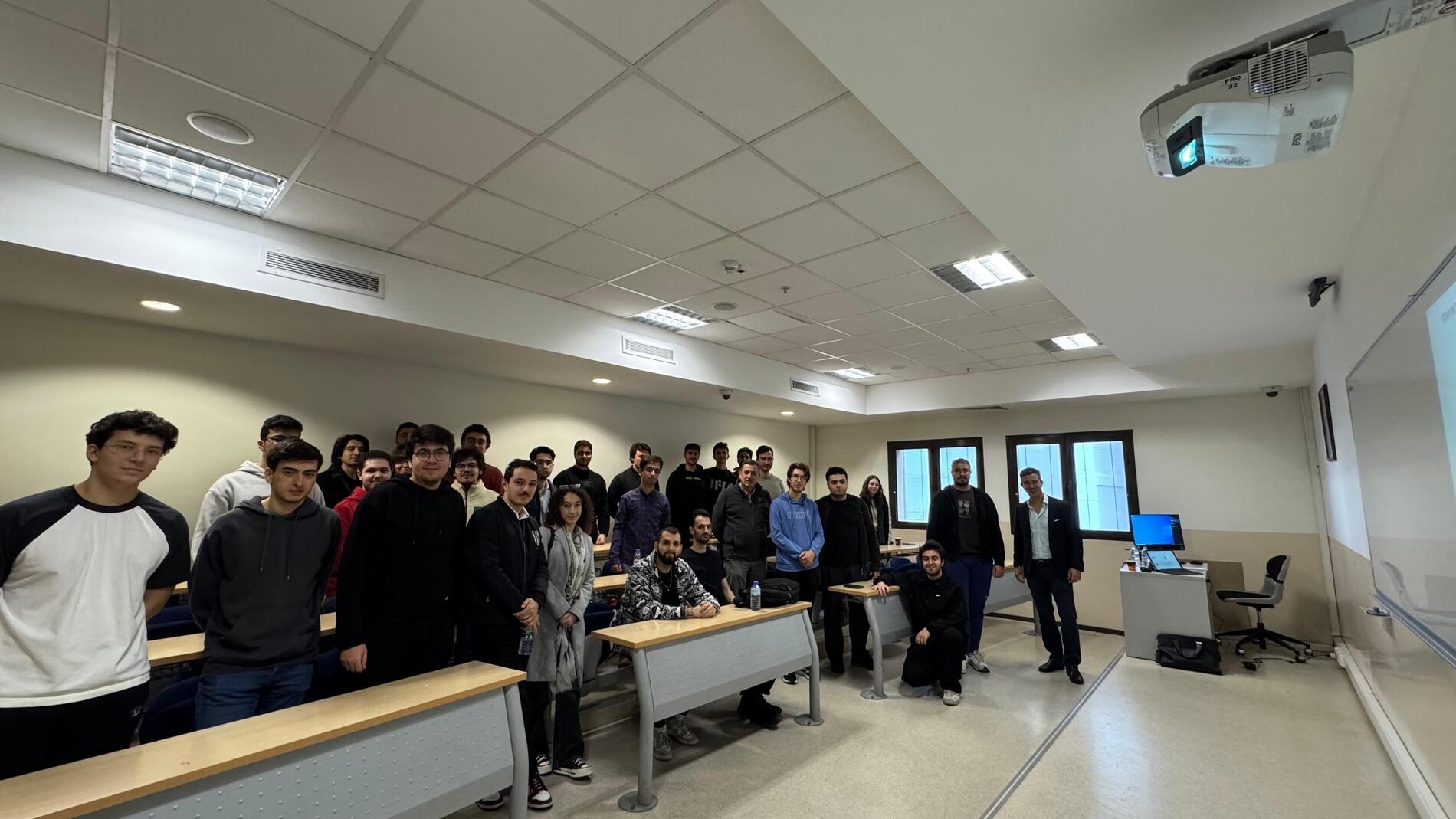
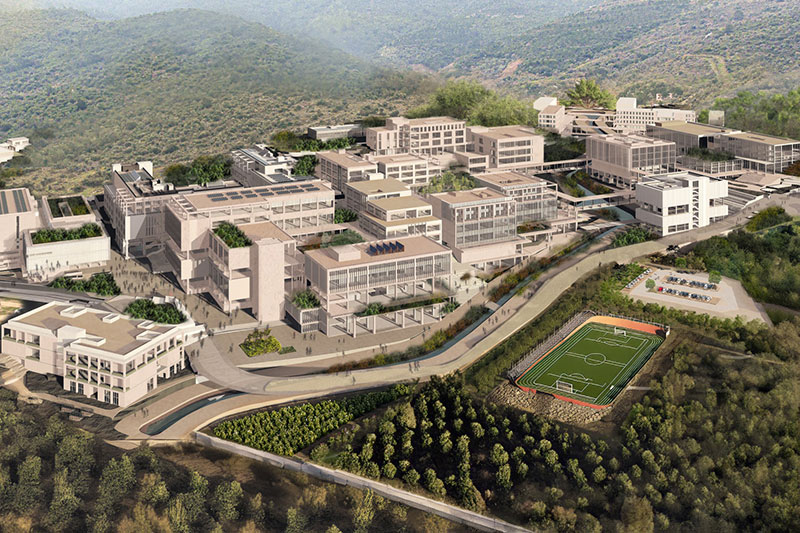
IZMIR UNIVERSITY OF ECONOMICS GÜZELBAHÇE CAMPUS
DetailsGLOBAL CAREER
As Izmir University of Economics transforms into a world-class university, it also raises successful young people with global competence.
More..CONTRIBUTION TO SCIENCE
Izmir University of Economics produces qualified knowledge and competent technologies.
More..VALUING PEOPLE
Izmir University of Economics sees producing social benefit as its reason for existence.
More..
You are one step ahead with your graduate education at Izmir University of Economics.