





- University
- Academic
- Schools/Vocational Schools
- Vocational School of Justice
- Vocational School
- Vocational School
- Department of Banking and Insurance (Turkish)
- Department of Computer Programming (Turkish)
- Department of Foreign Trade (Turkish)
- Department of Graphic Design (Turkish)
- Department of Interior Design (Turkish)
- Department of Construction Technology (Turkish)
- Department of Occupational Health and Safety (Turkish)
- Department of Media and Communication (Turkish)
- Department of Architectural Restoration (Turkish)
- Department of Radio and Tv Programming (Turkish)
- Department of Civil Aviation Cabin Services (Turkish)
- Department of Civil Aviation Transportation Management (Turkish)
- Department of Tourism and Hotel Management (Turkish)
- Department of Applied English Translation
- Vocational School Of Health Services
- Vocational School Of Health Services
- Department of Child Development (Turkish)
- Department of Physiotherapy (Turkish)
- Department of Paramedic (Turkish)
- Department of Opticianry (Turkish)
- Department of Medical Documentation and Secreteriat (Turkish)
- Department of Medical Imaging Techniques (Turkish)
- Department of Medical Laboratory Techniques (Turkish)
- Department of Elderly Care (Turkish)
- School of Applied Management Sciences
- School of Foreign Languages
- Faculties
- Faculty of Arts and Sciences
- Faculty of Fine Arts and Design
- Faculty of Law
- Faculty of Communication
- Faculty of Business
- Faculty of Engineering
- Faculty of Engineering
- Department of Computer Engineering
- Department of Biomedical Engineering
- Department of Electrical and Electronics Engineering
- Department of Industrial Engineering
- Department of Food Engineering
- Department of Genetics and Bioengineering
- Department of Aerospace Engineering
- Department of Civil Engineering
- Department of Mechanical Engineering
- Department of Mechatronics Engineering
- Department of Software Engineering
- Faculty of Health Sciences
- Medicine
- Graduate School
- Common Courses
- Schools/Vocational Schools
- Research
- Research Centers
- Library
- Smart Campus
- Technology Transfer Office
- İzmir Sciencepark
- Continuous Education Center (EKOSEM)
- Children's University
- Ethics Committee
- Teaching and Learning Center (EKOEĞİTİM)
- Psychology Application and Research Center
- Researcher Training Coordinatorship
- Research Collaborations And Innovation Coordinatorship
- Campus
- INTERNATIONAL
- Contact
Department of Software Engineering
GEAR 305 | Course Introduction and Application Information
| Course Name |
Turkish Cinema
|
|
Code
|
Semester
|
Theory
(hour/week) |
Application/Lab
(hour/week) |
Local Credits
|
ECTS
|
|
GEAR 305
|
Fall/Spring
|
3
|
0
|
3
|
4
|
| Prerequisites |
None
|
|||||
| Course Language |
English
|
|||||
| Course Type |
Service Course
|
|||||
| Course Level |
First Cycle
|
|||||
| Mode of Delivery | - | |||||
| Teaching Methods and Techniques of the Course | - | |||||
| National Occupation Classification | - | |||||
| Course Coordinator | ||||||
| Course Lecturer(s) | ||||||
| Assistant(s) | - | |||||
| Course Objectives | This course introduces the emergence and transformation of the film industry in Turkey from a historical perspective until 1990s. |
| Learning Outcomes |
The students who succeeded in this course;
|
| Course Description | The course includes the following topics and related discussions: Historical development and transformation of the film industry in Turkey; production mode, aesthetic features and narrative structure of Yeşilçam industry; leading filmmakers and their films; identity, politics and transnationalism issues; major debates on the history of cinema in Turkey. The evaluation system includes three criteria: One film review (assignment), one data driven film analysis (project) and one response paper (mid-term). This course is conducted in English however, some of the films listed in the outline are not available with English subtitles. Therefore, this course is recommended for the students who have minimum competence in Turkish. |
| Related Sustainable Development Goals |
|
|
|
Core Courses | |
| Major Area Courses | ||
| Supportive Courses | ||
| Media and Management Skills Courses | ||
| Transferable Skill Courses |
WEEKLY SUBJECTS AND RELATED PREPARATION STUDIES
| Week | Subjects | Related Preparation |
| 1 | Introduction How to avoid plagiarism? | |
| 2 | Debates on the historiography of cinema in Turkey Films: Selected early films by Lumiere Brothers and Thomas Edison. Georges Méliès, A Trip to the Moon (1902) Coen Brothers, World Cinema (2007) | Dilek Kaya Mutlu, “The Russian Monument at Ayastefanos (San Stefano): Between Defeat and Revenge, Remembering and Forgetting”, Middle East Studies 43:1 (2007); Savaş Arslan, “Introduction” in Cinema in Turkey: A New Critical History, Oxford University Press: 2011. |
| 3 | Production and movie-going in Turkey before 1950 Films: Muhsin Ertuğrul, Aysel Bataklı Damın Kızı (1935) Muhsin Ertuğrul, Kahveci Güzeli (1941) | Savaş Arslan “Pre-Yeşilçam: Cinema in Turkey until the Late 1940s” in Cinema in Turkey: A New Critical History, Oxford University Press: 2011. |
| 4 | Early masters of a late industry: The “cinema artists” generation Films: Lütfi Akad, Kanun Namına (1952) Osman Seden, Düşman Yolları Kesti (1959) | Savaş Arslan, “Early Yeşilçam: The Advent of Yeşilçam in the 1950s” in Cinema in Turkey: A New Critical History, Oxford University Press: 2011. |
| 5 | Movements and waves I: Social realism and new realism Films: Metin Erksan, Susuz Yaz (1963) Yılmaz Güney, Umut (1970) | Kurtuluş Kayalı, Metin Erksan Sinemasını Okumayı Denemek, Dost: 2004, pp. 77-90; |
| 6 | Movements and waves II: “Ulusal” and “Millî” cinemas Films: Halit Refiğ, Bir Türk’e Gönül Verdim (1969) Yücel Çakmaklı, Birleşen Yollar (1970) | Halit Refiğ, “En Doğru Yargılayıcı Tarihtir” in Ulusal Sinema Kavgası, Dergâh: 2009. Burçak Evren, “Yeşilçam ve İnanç Sineması” in Yücel Çakmaklı: Milli Sinemanın Kurucusu, Küre: 2014. |
| 7 | Yeşilçam I: Production and distribution Films: Yavuz Turgul, Aşk Filmlerinin Unutulmaz Yönetmeni (1990) Cem Kaya, Remake, Remix, Rip-Off (2014) | Nilgün Abisel, “Türk Sinemasında Film Yapımı Üzerine Notlar” in Türk Sineması Üzerine Yazılar, Phoenix: 2005. |
| 8 | Yeşilçam I: Genres and narration Films: Orhan Aksoy, Samanyolu (1967) Çetin İnanç, Dünyayı Kurtaran Adam (1982) | Nezih Erdoğan, “Narratives of Resistance: National Identity and Ambivalance in the Turkish Melodrama between 1965 and 1975”, Screen 39:3 (1998); Paul Willemen, “The Zoom in Popular Cinema: A Question of Performance”, Inter-Asia Cultural Studies (2013). |
| 9 | Migration and urbanization Films: Halit Refiğ, Gurbet Kuşları (1964) Kartal Tibet, Sultan (1978) | Gönül Dönmez-Colin, “Migration, Dis/Misplacement and Exile”, in Turkish Cinema: Identity, Distance and Belonging, Reaktion Books: 2008. |
| 10 | Political cinema Films: Zeki Ökten, Askerin Dönüşü (1974) Şerif Gören, Yol (1981) | (Court documents and censorship reports) |
| 11 | Gender Films: Lütfi Akad, Vesikalı Yarim (1968) Atıf Yılmaz, Dul Bir Kadın (1985) | Gönül Dönmez-Colin, “Gender, Sexuality and Morals in Transition”, in Turkish Cinema: Identity, Distance and Belonging, Reaktion Books: 2008 |
| 12 | Women filmmakers Films Türkan Şoray, Dönüş (1972) Bilge Olgaç, Gülüşan (1985) | Feryal Saygılıgil, “Bilge Olgaç’ın Gülüşan Film için Bir Okuma Denemesi,” Sinecine 2, 2010. |
| 13 | Transnationalism Films: Tunç Okan, Mercedes Mon Amour (1987) | Nejat Ulusay, “A Transformational Experience within the Contexts of ‘National’ and ‘Transnational’: The Case of Turkish Cinema” in Imaginaries Out of Place: Cinema, Transnationalism and Turkey, Gökçen Karanfil and Serkan Şavk (eds.), Cambridge Scholars Publishing: 2012. |
| 14 | Evaluation of the assignments | |
| 15 | Review of the semester | |
| 16 | Final Exam |
| Course Notes/Textbooks | |
| Suggested Readings/Materials |
EVALUATION SYSTEM
| Semester Activities | Number | Weigthing |
| Participation |
1
|
10
|
| Laboratory / Application | ||
| Field Work | ||
| Quizzes / Studio Critiques | ||
| Portfolio | ||
| Homework / Assignments |
2
|
50
|
| Presentation / Jury | ||
| Project |
1
|
40
|
| Seminar / Workshop | ||
| Oral Exams | ||
| Midterm | ||
| Final Exam | ||
| Total |
| Weighting of Semester Activities on the Final Grade |
4
|
100
|
| Weighting of End-of-Semester Activities on the Final Grade | ||
| Total |
ECTS / WORKLOAD TABLE
| Semester Activities | Number | Duration (Hours) | Workload |
|---|---|---|---|
| Theoretical Course Hours (Including exam week: 16 x total hours) |
16
|
3
|
48
|
| Laboratory / Application Hours (Including exam week: '.16.' x total hours) |
16
|
0
|
|
| Study Hours Out of Class |
14
|
3
|
42
|
| Field Work |
0
|
||
| Quizzes / Studio Critiques |
0
|
||
| Portfolio |
0
|
||
| Homework / Assignments |
2
|
8
|
16
|
| Presentation / Jury |
0
|
||
| Project |
1
|
14
|
14
|
| Seminar / Workshop |
0
|
||
| Oral Exam |
0
|
||
| Midterms |
0
|
||
| Final Exam |
0
|
||
| Total |
120
|
COURSE LEARNING OUTCOMES AND PROGRAM QUALIFICATIONS RELATIONSHIP
|
#
|
Program Competencies/Outcomes |
* Contribution Level
|
|||||
|
1
|
2
|
3
|
4
|
5
|
|||
| 1 |
Engineering Knowledge: Knowledge of mathematics, science, basic engineering, computer computation, and topics specific to related engineering disciplines; the ability to use this knowledge in solving complex engineering problems |
-
|
-
|
-
|
-
|
-
|
|
| 2 |
Problem Analysis: The ability to define, formulate, and analyze complex engineering problems by using fundamental science, mathematics, and engineering knowledge, while considering the relevant UN Sustainable Development Goals (SDGs) related to the problem. |
-
|
-
|
-
|
-
|
-
|
|
| 3 |
Engineering Design: The ability to design creative solutions to complex engineering problems; the ability to design complex systems, processes, devices, or products that meet present and future requirements, considering realistic constraints and conditions. |
-
|
-
|
-
|
-
|
-
|
|
| 4 |
Use of Techniques and Tools: The ability to select and use appropriate techniques, resources, and modern engineering and information technology tools, including prediction and modeling, for the analysis and solution of complex engineering problems, while being aware of their limitations |
-
|
-
|
-
|
-
|
-
|
|
| 5 |
Research and Investigation: The ability to use research methods, including literature review, designing experiments, conducting experiments, collecting data, analyzing and interpreting results, for the investigation of complex engineering problems. |
-
|
-
|
-
|
-
|
-
|
|
| 6 |
Global Impact of Engineering Practices: Knowledge of the impacts of engineering practices on society, health and safety, the economy, sustainability, and the environment within the scope of the UN Sustainable Development Goals (SDGs); awareness of the legal consequences of engineering solutions |
-
|
-
|
-
|
-
|
-
|
|
| 7 |
Ethical Behavior: Acting in accordance with the principles of the engineering profession; knowledge of ethical responsibility; awareness of acting impartially and inclusively, without discrimination in any matter. (FENG101) |
-
|
-
|
-
|
-
|
-
|
|
| 8 |
Individual and Team Work: The ability to work effectively as an individual and as a member or leader of both intra-disciplinary and interdisciplinary teams (whether face-to-face, remote, or hybrid). |
-
|
-
|
-
|
-
|
-
|
|
| 9 |
Verbal and Written Communication: Taking into account the various differences of the target audience (such as education, language, profession), particularly in technical matters. |
-
|
-
|
-
|
-
|
-
|
|
| 10 |
Project Management: Knowledge of business practices such as project management and economic feasibility analysis; awareness of entrepreneurship and innovation. |
-
|
-
|
-
|
-
|
-
|
|
| 11 |
Lifelong Learning: The ability to learn independently and continuously, adapt to new and emerging technologies, and think critically about technological changes. |
-
|
-
|
-
|
-
|
-
|
|
*1 Lowest, 2 Low, 3 Average, 4 High, 5 Highest

NEWSALL NEWS


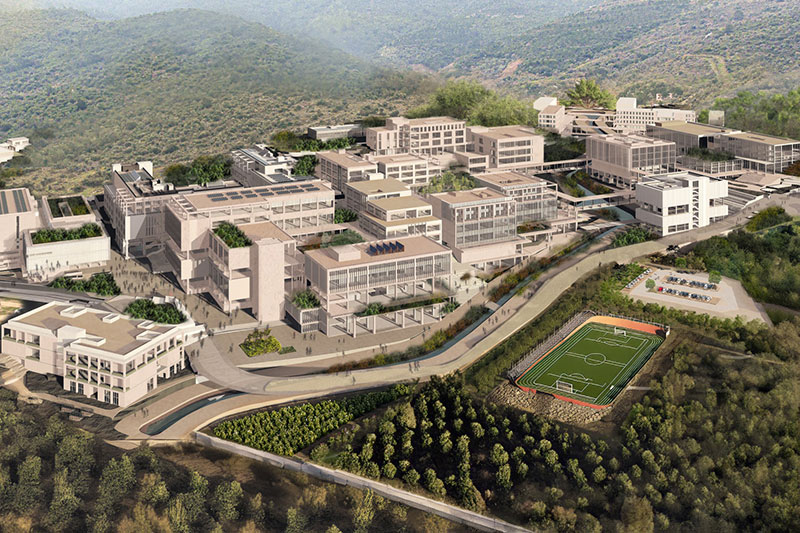
IZMIR UNIVERSITY OF ECONOMICS GÜZELBAHÇE CAMPUS
DetailsGLOBAL CAREER
As Izmir University of Economics transforms into a world-class university, it also raises successful young people with global competence.
More..CONTRIBUTION TO SCIENCE
Izmir University of Economics produces qualified knowledge and competent technologies.
More..VALUING PEOPLE
Izmir University of Economics sees producing social benefit as its reason for existence.
More..
You are one step ahead with your graduate education at Izmir University of Economics.